The wrong rubbish collection setup can cost a Sydney business more than it should. A bin that is too small means overflow, extra collections and frustrated staff, while a service that is too frequent can leave you paying for capacity you simply do not use.
The trick is not to find the biggest bin or the cheapest quote. It is to match your commercial rubbish collection service with the waste your site actually produces, how quickly it builds up and how your premises operate.
For businesses across Sydney, that means looking beyond the bin itself. Collection frequency, access, waste types, compliance, recycling and service reliability all matter.
What Is a Commercial Rubbish Collection?
Commercial rubbish collection covers the scheduled removal and transport of business-generated waste, with the right service depending on your waste type, volume, site and collection requirements.
Unlike household rubbish collection, business waste can vary dramatically from one site to another. A café in the inner suburbs, a warehouse in Western Sydney and a construction site in South-West Sydney can have completely different waste profiles.
The right service should account for:
- Waste volume: How much rubbish does your business generate each week?
- Waste type: General waste, cardboard, food waste, recyclables and other materials may need different handling.
- Available space: Your site needs enough room for bins without restricting staff, vehicles or access points.
- Collection frequency: A busy hospitality venue may need more frequent servicing than a small office.
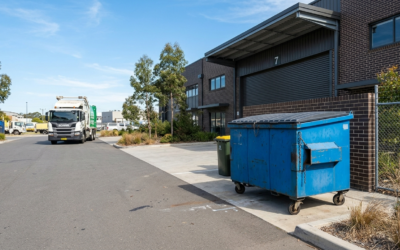
- Vehicle access: Collection vehicles need a safe and practical route to the bin area.
NSW businesses also have responsibilities around waste management. Service NSW notes that waste management includes collecting, transporting, disposing of and recycling waste, while the EPA oversees the regulatory framework.
Start With Your Business’s Actual Waste Output
Before choosing a bin or collection schedule, look at what your site produces rather than relying on a rough estimate.
This sounds obvious, but it is where plenty of businesses go wrong.
A bin that looks suitable on paper might be completely unsuitable once deliveries increase, staff numbers change or a busy trading period arrives. On the other hand, a large bin collected several times a week can quietly become an unnecessary operating expense.
For one week, keep an eye on what goes into your bins.
Ask:
- How quickly does the bin fill?
- Which materials make up most of the waste?
- Are staff using recycling bins correctly?
- Does waste increase on particular days?
- Is the bin genuinely full before collection?
That simple review gives you a much better starting point for choosing commercial waste services.
A simple rule of thumb
If your bin is consistently half empty at collection time, your business may be over-serviced.
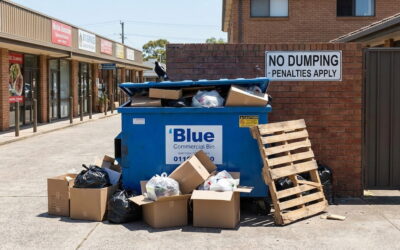
If rubbish is regularly stacked beside the bin before collection day, you may need greater capacity or more frequent collections.
Neither situation should simply be accepted as the cost of doing business.
Choose the Right Bin Type and Capacity
The best commercial bin is the one that fits your waste volume, material type and site constraints without creating unnecessary costs.
Commercial bin hire can involve different bin styles and capacities, so selecting the right option starts with understanding what your business produces.
For example:
- Small offices: Often need relatively modest general waste and recycling capacity.
- Cafés and restaurants: Usually produce food-related waste and packaging, which can require more frequent servicing.
- Retail businesses: May generate substantial cardboard and packaging waste.
- Warehouses: Can produce high volumes of cardboard, plastic wrapping and general waste.
- Construction sites: Often require larger containers suited to project-based waste volumes.
Don’t automatically choose the largest option available. Bigger is not always better.
A bin taking up valuable loading or parking space can become an operational nuisance, particularly where access is tight.
Match Collection Frequency to Your Trading Pattern
Collection frequency should follow your waste output, not simply a standard schedule.
A business does not generate the same amount of rubbish every day.
A restaurant may have heavy waste volumes around weekends. A retailer can see a sharp increase during promotional periods. A warehouse may generate more packaging waste when stock arrives.
This is why a fixed collection schedule deserves a regular review.
What can change your collection needs?
- Seasonal trading
- Business growth
- New staff or longer operating hours
- Increased deliveries
- Renovations or fit-outs
- Temporary projects
- Changes to your product range
A flexible commercial garbage collection arrangement can help you respond to these changes instead of paying for a service that no longer reflects how your business operates.
Don’t Overlook Site Access
The collection vehicle needs to reach your bins safely, and poor access can create delays, failed collections or additional charges.
This is particularly relevant for warehouses, industrial sites, shopping centres and businesses operating from shared commercial properties.
Before arranging collection, check:
- The width of the access route
- Overhead clearance
- Turning space
- Loading dock access
- Gates and security arrangements
- Where vehicles can safely stop
- Whether other vehicles regularly block the collection area
A bin might fit neatly into a corner, but that does not mean a collection vehicle can reach it.
For larger premises, it is worth considering the entire route from the street to the bin location rather than looking only at the final few metres.
Consider Waste Separation and Recycling Requirements
Separating suitable waste streams can improve resource recovery, but the system needs to work in practice.
NSW’s waste hierarchy places avoidance and reduction at the top, followed by resource recovery such as reuse and recycling, with disposal lower down the hierarchy.
That means businesses should look at what can be kept out of general waste before simply increasing bin capacity.
Cardboard is often an obvious starting point for offices, warehouses and retailers. Food waste is another important consideration for businesses that handle or sell food.
There is also a significant regulatory change already underway in NSW. From 1 July 2026, the state’s business food waste separation requirements begin applying to relevant businesses and institutions based on their weekly residual waste capacity, with further thresholds coming into effect in 2028 and 2030.
For eligible businesses, getting the right commercial waste management services in place is becoming even more important.
Make Sure Your Waste Is Going to the Right Place
Choosing a collection provider is only part of responsible waste management. Businesses also need to consider what happens after the rubbish leaves the site.
NSW businesses have responsibilities around waste classification and lawful disposal. The EPA states that waste generators must classify their waste appropriately and ensure it is taken to a facility that is legally authorised to receive that waste.
This matters particularly when your site produces unusual, heavy or potentially hazardous materials.
Certain waste streams have additional requirements, including hazardous waste and other regulated materials. Some waste types may also need tracking during transport.
Before signing a collection agreement, ask:
- What types of waste can the service accept?
- Where is the waste taken?
- Are certain materials excluded?
- Are additional charges possible?
- How are recycling and resource recovery handled?
- What happens if your waste volume suddenly increases?
A clear answer is worth far more than a vague promise.
Compare the Whole Service, Not Just the Price
The cheapest quote is not necessarily the lowest-cost waste solution once collection frequency, charges and operational disruption are considered.
When comparing providers, look beyond the headline figure.
Check whether the quote clearly explains:
- Collection frequency: How often will the bin be serviced?
- Bin capacity: What size and type are included?
- Additional charges: Are there fees for excess weight, contamination, failed collections or special requirements?
- Flexibility: Can the service change as your business needs change?
- Support: Can you actually reach someone when a problem occurs?
- Site requirements: Has the provider considered your access and bin location?
This is where a proper comparison can save money. A slightly higher quoted rate may make more sense if the service better matches your site and avoids repeated collection problems.
Keep Compliance on the Checklist
Good waste collection should support your environmental, operational and workplace responsibilities rather than create another problem to manage.
Commercial waste compliance is not simply about having a bin on site.
NSW regulations cover how waste is handled, stored, transported, processed and disposed of, with penalties applying to certain forms of non-compliance. Service NSW also notes that both a waste owner and transporter can potentially be responsible when waste is transported to a facility that cannot lawfully receive it.
If you want a deeper look at the issue, our guide on commercial waste bin hire compliance in Sydney covers key considerations for local businesses.
The practical takeaway is simple: know what your business produces, know where it is going and use a collection arrangement that supports those requirements.
Watch for the Warning Signs
Small collection problems can point to a larger issue with your current waste setup.
Your current arrangement may need attention if:
- Bins regularly overflow before collection
- Collections happen when bins are barely used
- Staff leave rubbish beside the bins
- You regularly need extra collections
- Waste types are mixed incorrectly
- Collection vehicles struggle to access the site
- Unexpected charges keep appearing
- Your business has grown but the waste service has not changed
These problems rarely disappear on their own.
If you are seeing several of them at once, it is probably time to review the whole setup rather than simply ordering another bin.
For more practical guidance, read our article on common commercial garbage collection mistakes in Sydney.
Why Sydney Businesses Benefit From a Local Approach
Sydney’s commercial sites vary widely, so a waste service needs to account for the realities of the local area.
From busy retail premises to industrial properties and growing business hubs across South-West Sydney, businesses deal with different access arrangements, waste volumes and operating patterns.
A local provider can also help you look at the practical details that are easy to overlook, such as where bins should sit, how often they need servicing and whether your current setup is keeping pace with your operation.
That is the approach Blue Commercial Bin takes. Rather than treating every site the same, the focus is on understanding what the business actually needs and building a collection arrangement around it.
A Practical Checklist Before Choosing Your Collection Service
Use this quick checklist before comparing commercial waste providers or changing your current arrangement.
- Measure your waste volume.
Look at how much rubbish your business produces over a typical week. - Identify your main waste streams.
Separate general waste, cardboard, food waste and recyclable materials where practical. - Check your site access.
Make sure collection vehicles can safely reach the bin area. - Review your collection frequency.
Ask whether you are paying for unnecessary collections or struggling with too few. - Check the fine print.
Look for additional fees, restrictions and conditions. - Consider future changes.
Think about seasonal peaks, business growth and upcoming projects. - Review compliance requirements.
Make sure your waste is appropriately classified and handled. - Compare service quality, not just price.
Reliability matters when rubbish affects your daily operations.
Choose a Commercial Rubbish Collection Service That Fits Your Site
The right commercial rubbish collection service should not make you think about rubbish more often. It should make the whole process easier to manage.
Start with your actual waste volume. Choose bins that suit your site. Set a collection frequency that reflects your trading patterns, and make sure your provider understands access, waste types and NSW requirements.
For Sydney businesses looking for a practical approach to commercial bin hire, waste collection and ongoing waste management, Blue Commercial Bin can help you review what you are currently using and identify where changes may make sense.
Contact Us today to discuss your waste requirements with Blue Commercial Bin and find a commercial rubbish collection arrangement that fits your Sydney business.
Frequently Asked Questions
What is the best commercial rubbish collection option for a Sydney business?
The best option depends on your waste volume, waste types, site access, bin capacity and required collection frequency. A small office and a busy warehouse will generally have very different requirements.
How often should a commercial rubbish bin be collected?
There is no single schedule that suits every business. Collection may range from several times a week to weekly or fortnightly, depending on waste output, business activity and bin capacity.
How do I choose the right commercial bin size?
Start by measuring your typical weekly waste volume and identifying which materials make up most of it. Your provider can then help match bin capacity and collection frequency to your site.
What should I check before arranging commercial waste collection?
Check your waste types, expected volume, bin location, vehicle access, collection frequency, accepted materials and any potential additional charges. You should also confirm that your waste is being handled and disposed of lawfully.
Can Sydney businesses change their commercial waste collection frequency?
In many cases, yes. Businesses may need to increase or reduce collections when waste volumes change because of seasonal trading, growth, renovations or operational changes.
Does commercial waste collection include recycling?
It can. Many commercial waste arrangements can include separate recycling streams, depending on the materials your business produces and the services available for your site.
Are Sydney businesses responsible for their commercial waste after collection?
Businesses can have responsibilities around waste classification and lawful disposal. NSW guidance states that waste generators need to ensure waste is appropriately classified and managed, while certain waste streams have additional tracking or handling requirements.
What are the current NSW food waste requirements for businesses?
NSW has introduced staged requirements for relevant businesses and institutions to separate food waste from general waste. The first stage began on 1 July 2026 for sites meeting specified weekly residual waste capacity thresholds, with further stages commencing in 2028 and 2030.