Managing waste is a routine part of running an office or warehouse, but choosing the right waste service can make a major difference to cleanliness, efficiency, compliance and operating costs.
Commercial Waste Services typically cover more than simply supplying a bin and collecting it. A reliable service can include commercial bin hire, scheduled waste collection, recycling, suitable bin sizing, waste separation and responsible disposal.
For businesses across Sydney and Greater Western Sydney, understanding what is included helps you choose a practical waste solution that matches the amount and type of waste your workplace generates.
What Are Commercial Waste Services?
Commercial Waste Services are professional waste solutions provided to businesses for storing, collecting, transporting, sorting, recycling and disposing of commercial waste. Services can include commercial bin hire, scheduled collection, recycling and waste management support.
Offices and warehouses generate different waste streams. An office may produce paper, packaging, food scraps and general rubbish, while a warehouse may deal with cardboard, plastic wrap, damaged stock, packaging materials and larger volumes of general waste.
That is why commercial waste collection should be based on the business’s actual waste profile rather than a one-size-fits-all approach.
In NSW, commercial and industrial waste remains a significant part of the state’s waste stream. The NSW EPA reported that the commercial and industrial recycling rate reached 52% in 2024-25, up from 50% the previous year.
For businesses, that creates a clear opportunity to separate recoverable materials and reduce unnecessary landfill waste.
What Is Included in Commercial Waste Services?
While services vary according to the provider and business requirements, a commercial waste service commonly includes the following.
1. Commercial Bin Hire
The right bin provides a secure and practical place to store waste between collections.
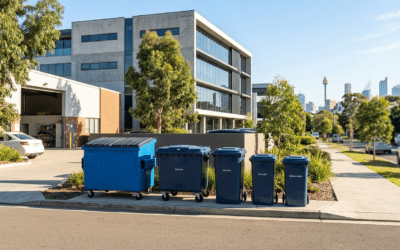
Commercial bin hire can suit offices, warehouses, retail premises, industrial sites and other commercial properties. Depending on the waste volume and site requirements, businesses may select different bin capacities and collection frequencies.
Choosing the right size matters. A bin that is too small can overflow quickly, while an oversized bin may result in unnecessary costs.
Businesses looking for a suitable solution can consider commercial rubbish bins based on their waste volume, available space and collection requirements.
2. Scheduled Commercial Waste Collection
Regular commercial waste collection keeps waste moving off-site before it becomes a workplace problem.
Collection frequency can depend on:
- The number of employees
- Daily waste volume
- Warehouse activity
- Available bin capacity
- Waste type
- Site access
- Local collection requirements
A busy warehouse may require more frequent collection than a small office. Likewise, an office with a large workforce may need additional capacity during busy periods.
The goal is simple: keep waste under control without paying for unnecessary collections.
For businesses assessing their options, commercial rubbish collection can be planned around operational needs, site conditions and waste volumes.
3. Commercial Garbage Collection
Commercial garbage collection generally handles everyday non-recyclable waste generated through normal business activities.
For an office, this may include contaminated packaging, non-recyclable food-related waste and general rubbish. Warehouses can produce larger quantities of packaging and operational waste.
However, businesses should not assume every item belongs in a general waste bin.
Separating recyclable and restricted materials at the point of disposal can help improve waste outcomes and reduce contamination.
4. Recycling and Waste Separation
A strong commercial waste management services strategy should consider what can be recovered before sending waste to landfill.
Common recyclable materials may include:
- Cardboard
- Paper
- Certain plastics
- Metals
- Packaging materials
- Other approved recyclable materials
The exact materials accepted depend on the collection service and local requirements.
This matters because NSW generated 22.4 million tonnes of waste in 2024-25, while the state’s overall recycling rate reached 67%. The commercial and industrial stream accounted for a 52% recycling rate.
For an office or warehouse, even small improvements in separation can make day-to-day waste handling more efficient.
5. Waste Bin Sizing
Selecting the right bin size is one of the most important parts of setting up a commercial waste service.
Before choosing a bin, consider:
- How much waste the business produces each week.
- What types of waste are generated.
- How much storage space is available.
- How frequently the bin can be collected.
- Whether waste volumes change during busy periods.
A useful starting point is to review actual waste levels over several collection cycles instead of estimating from employee numbers alone.
Businesses in Greater Western Sydney can also review commercial bin size requirements before selecting a service.
Commercial Waste Services for Offices
Office waste can appear straightforward, but poor waste separation can quickly create unnecessary volume.
A typical office may generate:
- Paper and cardboard
- Food and beverage waste
- General rubbish
- Packaging
- Plastic containers
- Printer and stationery waste
- Small electronic items
A practical office waste setup should place suitable bins where employees actually use them. Clear signage can also help staff separate waste correctly.
For example, placing recycling bins near printers and kitchen areas can make correct disposal easier, while general waste bins can be positioned in common areas.
The result is a cleaner workplace and a more organised waste process.
Commercial Waste Services for Warehouses
Warehouses often generate considerably higher waste volumes than standard offices.
Common warehouse waste includes:
- Cardboard boxes
- Plastic wrapping
- Pallets and packaging
- Damaged packaging
- General rubbish
- Product-related waste
- Strapping and other packing materials
Because warehouse waste can build up quickly, bin capacity and collection frequency become particularly important.
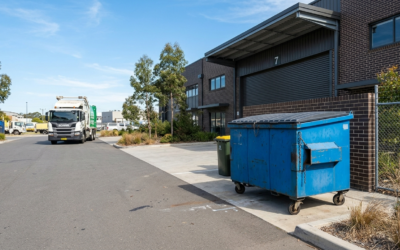
Businesses should also consider where bins are positioned. They need to be accessible to staff while avoiding interference with loading zones, vehicle movement and other warehouse operations.
For businesses in South West Sydney, commercial waste bin hire can form part of a structured approach to handling higher-volume workplace waste.
What Should Not Go Into Commercial Bins?
Not every item belongs in a general commercial waste bin.
Batteries are a particularly important example. The NSW EPA warns that batteries should not be placed in waste or recycling bins because they can cause fires in garbage trucks and waste facilities.
In 2025, Fire and Rescue NSW recorded 332 lithium-ion battery-related incidents, highlighting the importance of correct battery disposal.
Businesses should therefore identify restricted or hazardous items before disposing of them through standard waste services.
This is particularly relevant for warehouses that handle electronic products, equipment or battery-powered devices.
Businesses can also review why batteries cannot go in commercial bins to help staff understand the risks.
Batteries, hazardous materials and other restricted waste should not automatically be placed in general commercial bins. Businesses should check the accepted waste types for their service and use an appropriate disposal pathway for restricted materials.
Waste Compliance Matters
A commercial waste system should support more than cleanliness. It should also help businesses manage waste responsibly.
Incorrect disposal can lead to contamination, safety issues, overflowing bins and operational disruption.
Businesses should therefore consider:
- What materials are accepted?
- Are restricted materials separated?
- Are bins suitable for the waste being generated?
- Is collection frequent enough?
- Are staff aware of correct disposal procedures?
- Does the service suit the site’s access and storage conditions?
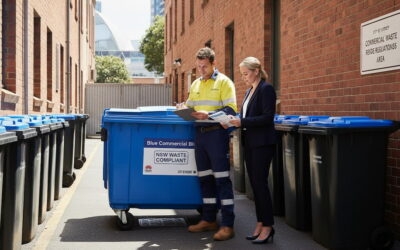
Businesses can review commercial waste bin hire compliance when assessing the operational and compliance considerations involved in commercial waste management.
5 Common Commercial Waste Mistakes to Avoid
Even a well-run business can make avoidable waste management mistakes.
1. Choosing a Bin Based Only on Price
The cheapest bin is not necessarily the most cost-effective option. Insufficient capacity can lead to overflow and additional collections.
2. Ignoring Waste Composition
Two businesses producing the same volume of waste may require completely different solutions if their waste types differ.
3. Allowing Bins to Overflow
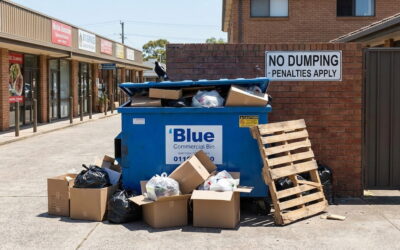
Overflowing bins create hygiene, presentation and workplace management problems. Collection frequency should reflect actual waste generation.
4. Mixing Recyclable and General Waste
Poor separation can increase contamination and reduce the amount of material that can be recovered.
5. Putting Restricted Items in General Bins
Batteries and other unsuitable materials can create serious safety risks.
Businesses can avoid these issues by reviewing the common commercial garbage collection mistakes before setting up or reviewing their waste arrangements.
How to Choose the Right Commercial Waste Service?
Before arranging commercial waste collection, use this simple checklist:
Step 1: Assess your waste.
Identify the main materials your office or warehouse produces.
Step 2: Estimate your volume.
Review how quickly existing bins fill between collections.
Step 3: Choose suitable commercial rubbish bins.
Consider capacity, location, access and collection frequency.
Step 4: Separate waste where practical.
Keep recyclable materials and restricted items away from general waste.
Step 5: Review collection frequency.
Adjust services if your business experiences seasonal peaks or changes in activity.
Step 6: Consider the full service.
Look beyond bin supply and assess collection, disposal, recycling and ongoing waste management requirements.
For businesses that need a broader approach, commercial waste management services can help bring bin hire and collection requirements into one organised waste strategy.
Why Is a Commercial Waste Service Worth Planning Properly?
Waste management is easy to overlook because it happens in the background. However, overflowing bins, unsuitable containers and missed collections can quickly become visible business problems.
A properly planned service gives offices and warehouses a clearer system for storing, separating and removing waste.
It can also help businesses:
- Maintain cleaner premises
- Reduce unnecessary waste volume
- Improve workplace organisation
- Support recycling practices
- Avoid unsuitable disposal
- Manage collection schedules more effectively
- Respond to changing waste volumes
For growing businesses, having a waste system that can adjust as operations change is particularly valuable.
When Is Commercial Bin Hire a Better Option?
Commercial bin hire can be useful when a business needs a dedicated waste container without managing the equipment itself.
It may suit businesses that:
- Generate regular commercial waste
- Need scheduled collections
- Have limited on-site waste storage
- Experience changing waste volumes
- Need a dedicated commercial waste solution
- Want a more organised alternative to ad-hoc rubbish removal
Blue Commercial Bin provides commercial waste solutions for businesses across Sydney and surrounding areas, including bin hire and waste collection options.
Businesses can also learn more about Blue Commercial Bin’s commercial waste services and how its commercial offering can support day-to-day business waste requirements.
Frequently Asked Questions About Commercial Waste Services
What is included in Commercial Waste Services?
Commercial Waste Services can include bin hire, scheduled waste collection, general waste disposal, recycling options, waste separation and waste management support. The exact service depends on the business, waste type, bin capacity and collection requirements.
What type of bin does an office need?
An office generally needs a bin suitable for its weekly general waste volume, along with appropriate recycling options where available. Employee numbers, workplace layout and collection frequency should also be considered.
How often should commercial waste be collected?
Collection frequency depends on the amount and type of waste generated. A small office may require less frequent collection, while a busy warehouse may need more regular commercial garbage collection.
Can batteries go into commercial rubbish bins?
No. Batteries should not be placed in general waste or recycling bins. The NSW EPA warns that batteries can cause fires in garbage trucks and waste facilities and recommends using appropriate battery recycling and drop-off services.
How do I choose the right commercial bin size?
Assess your average waste volume, waste types, available storage space, site access and collection frequency. Monitoring how quickly your current bins fill can provide a more accurate indication than estimating from staff numbers alone.
What is the difference between commercial waste collection and commercial rubbish collection?
The terms are often used interchangeably, but commercial waste collection can refer broadly to the collection and management of business waste, while commercial rubbish collection commonly refers to the removal of general commercial rubbish.
Do warehouses need different waste services from offices?
Often, yes. Warehouses can generate larger volumes of cardboard, plastic packaging and operational waste. They may therefore require larger commercial rubbish bins or more frequent collections than a typical office.
Conclusion
Effective waste management starts with understanding what your business actually produces. For offices, that may mean managing everyday rubbish, paper, packaging and food-related waste. For warehouses, higher volumes of cardboard, plastics and operational materials can require greater capacity and more frequent collections.
The right Commercial Waste Services should provide suitable bins, reliable collection, practical waste separation and a disposal process that supports the needs of your site.
By choosing the right bin size, monitoring waste volumes and keeping unsuitable materials out of general waste, businesses can create a cleaner, safer and more efficient waste process.
For dependable commercial waste solutions across Sydney and surrounding areas, Blue Commercial Bin can help businesses arrange practical bin and collection options. Contact Us to discuss your commercial waste requirements and find a suitable solution for your workplace.