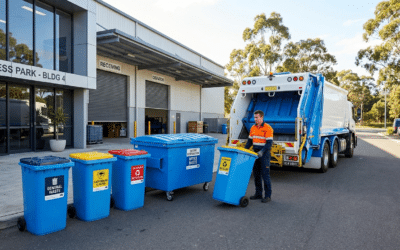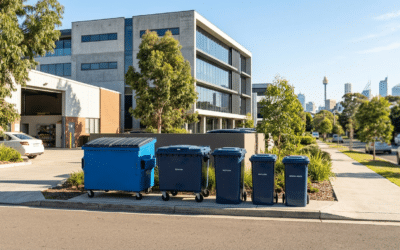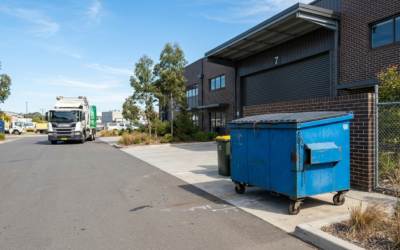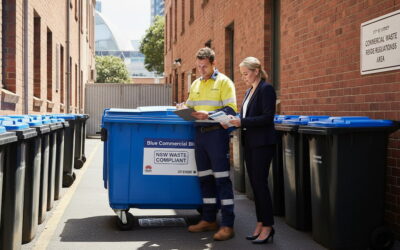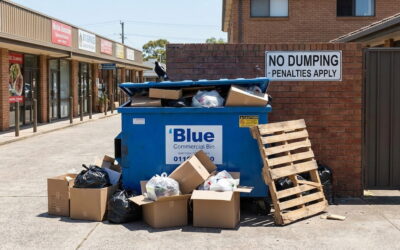
In short, commercial waste is the rubbish and recyclables a business, school or organisation produces while it operates. It’s generally handled through a private commercial collection service rather than a household council pickup.
We’re an Australian family-owned commercial bin business based in Revesby, and this guide explains what commercial waste is, the main types you’ll deal with and how to set up a collection that suits your site.
What is commercial waste?
Commercial waste is any waste generated by business activity rather than a household. That includes offices, shops, cafés, schools, warehouses, workshops and factories. It covers everyday rubbish such as food scraps from a staff room, packaging from deliveries and paper from the office printer.
The key factor is the source, not the material. A cardboard box from a home is household waste. The same box from a warehouse delivery is commercial waste.
How commercial waste differs from household waste
Household council services are designed around homes. They use small wheelie bins with fixed weekly or fortnightly pickups and set rules about what goes in each bin.
Businesses rarely fit that pattern. A warehouse might fill a large bin with cardboard in a few days, while a small office might only need a pickup every couple of weeks. Commercial waste services are built for that variation, with larger bins and collection schedules that match how much waste a site actually produces.
Volume is the other big difference. Many businesses produce more waste than a household bin can hold, which is why commercial bins range from compact rear lift bins to large hook bins.
Common types of commercial waste
General waste
General waste is the mixed rubbish that can’t be recycled through your service. Think food-stained packaging, soft plastics, broken items and floor sweepings. For most businesses, this is the largest stream by volume.
Paper and cardboard
Offices, retailers and warehouses often produce large amounts of paper and cardboard. Keeping it separate from general waste lets it be recycled and frees up space in your general waste bin. Flattening boxes before they go in makes a noticeable difference to how much fits.
Waste that needs a specialist
Some commercial waste can’t go in a standard bin at all. This includes hazardous materials such as chemicals, batteries and other specialised waste. These need a licensed specialist service. Our guide on why batteries cannot go in our bins explains the risks and what to do instead.
Who produces commercial waste in Sydney?
Almost every organisation that isn’t a private home. In South West Sydney, that includes:
- Schools, with classroom paper, canteen waste and playground rubbish
- Warehouses and distribution centres, with cardboard, pallet wrap and packaging
- Offices, with paper, kitchen waste and general rubbish
- Retailers and food businesses, with packaging and daily general waste
- Workshops and small factories, with offcuts and bulky packaging
Each of these sites has a different waste pattern, which is why a one-size-fits-all collection rarely works.
How commercial waste is collected
Most businesses use a commercial bin hire and collection service. The process is straightforward:
- You request a quote with your address, waste type, bin size and preferred schedule.
- The bin is delivered and placed on site.
- It’s emptied on an agreed schedule, which can be daily, several times a week, weekly, fortnightly or monthly.
- You adjust the size or frequency as your business changes.
Bin choice depends on space and volume. An 1100L rear lift bin suits tight areas such as shared waste rooms, while front lift bins from 1.5m³ to 4.5m³ suit sites with steadier, larger volumes. For high-volume operations, hook bins from 12 to 30m³ are an option. You can compare the options on our commercial waste bins page.
If you’re unsure what size to start with, our guide to choosing the right commercial bin size walks you through it.
Simple ways to manage commercial waste better
A few habits make commercial waste easier and often cheaper to manage:
- Separate cardboard from general waste. It keeps your general waste bin from filling too quickly.
- Match collection frequency to your peaks. A retailer might need extra pickups during busy periods and fewer in quiet months.
- Keep lids closed and bins accessible. Overfilled or blocked bins can stop a driver completing the service.
- Keep hazardous items out. Set up a separate disposal route for batteries, chemicals and similar items.
- Review your setup every few months. Waste volumes change as a business grows.
For a closer look at what can go wrong, read our article on common mistakes businesses make with commercial garbage collection.
FAQs
Is commercial waste the same as industrial waste?
Not quite. Commercial waste usually refers to everyday business rubbish from offices, shops, schools and warehouses. Industrial waste often comes from manufacturing, construction or heavy industry and can be bulkier. Blue Commercial Bin handles commercial general waste and cardboard, while our affiliated business, Blue Skip Bin, handles industrial waste.
Can my business use council household bins?
Household council services are generally set up for residential properties, so most businesses arrange a private commercial collection. A commercial service also gives you larger bins and a schedule that suits your actual waste volume. Check with your local council if you’re unsure what applies to your property.
What can’t go in a commercial general waste bin?
Hazardous and specialised waste, such as batteries, chemicals and other dangerous materials, should never go in a standard commercial bin. They can cause fires or harm drivers and need a licensed specialist service. Blue Commercial Bin does not accept hazardous or specialised waste.
How often should commercial waste be collected?
It depends on how much waste your site produces and how quickly the bins fill. Some businesses need daily pickups, while others only need a monthly service. A good provider will set the frequency around your needs and let you change it as your needs change.
Bringing it together
Commercial waste is simply the waste your business creates while it runs, and managing it well comes down to the right bin, the right schedule and keeping problem items out. Get those three right and your bins stop being a daily headache.
Blue Commercial Bin provides commercial waste collection for schools, warehouses and businesses across South West Sydney, with no hidden fees and no lock-in contracts. Request a free quote and we’ll help you choose the bin and schedule that fits your site.